The environment as a weapon: the maps
Elemental Brawl · level design and the language that holds the arenas together
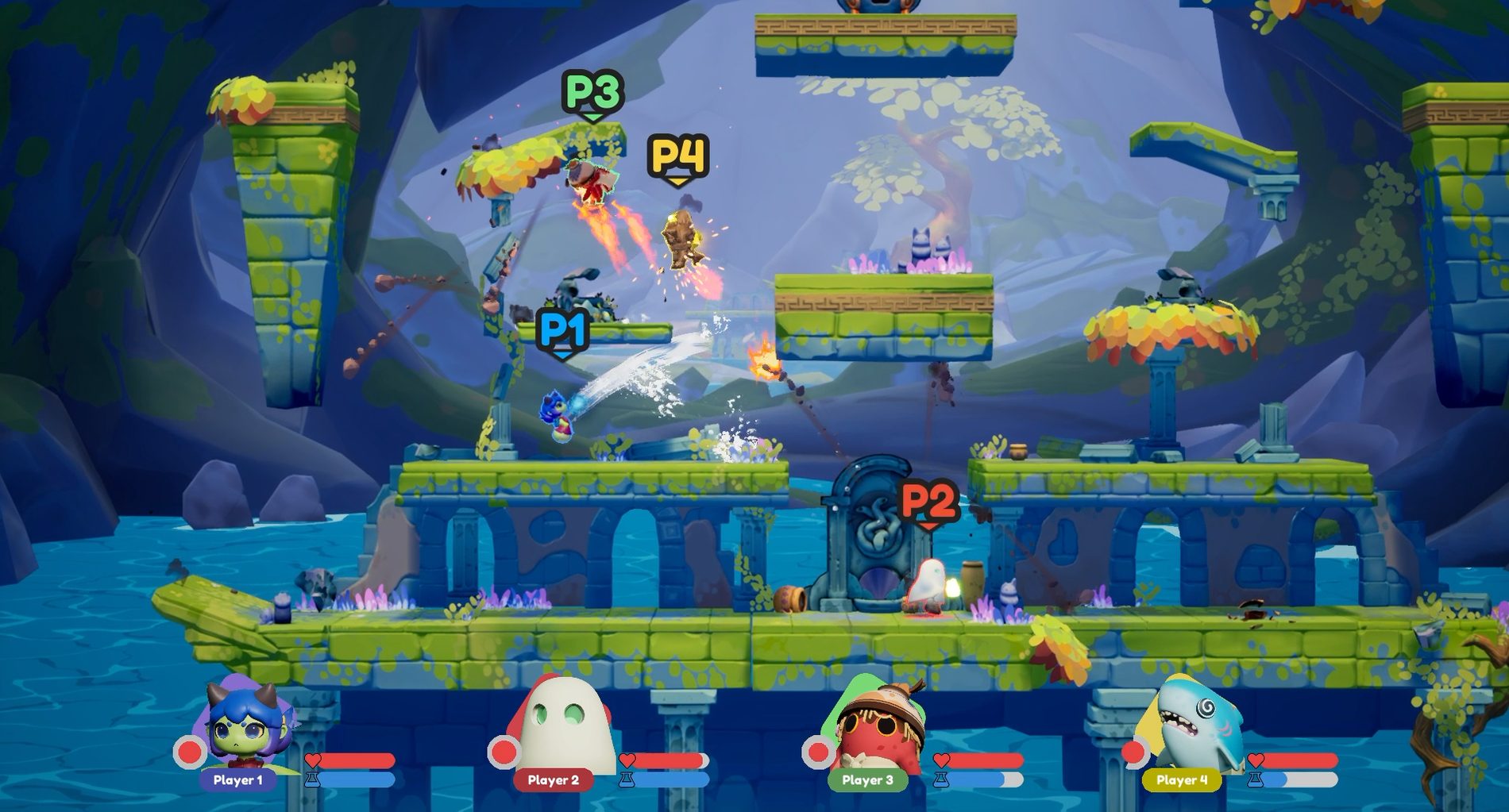
In Elemental Brawl, the map is not a stage: it is a tool. Elements are born from the scenery, shots ricochet off blocks, and the game's promise fits in one sentence I used to describe it: master the environment, defeat your opponents. I designed the maps of the released game and the system that would support the arenas to come.
Drawing floors on quicksand
I will be direct about the hard part: making maps was the most thankless work of the project. The game changed all the time, as every game in development does, and each mechanic change reopened map decisions that seemed settled. I reached launch with simpler maps than the ideas I had, and for a good while that frustrated me.
The mature answer to that problem was not insisting on complex maps: it was creating a language that could withstand change.
A grammar of platforms
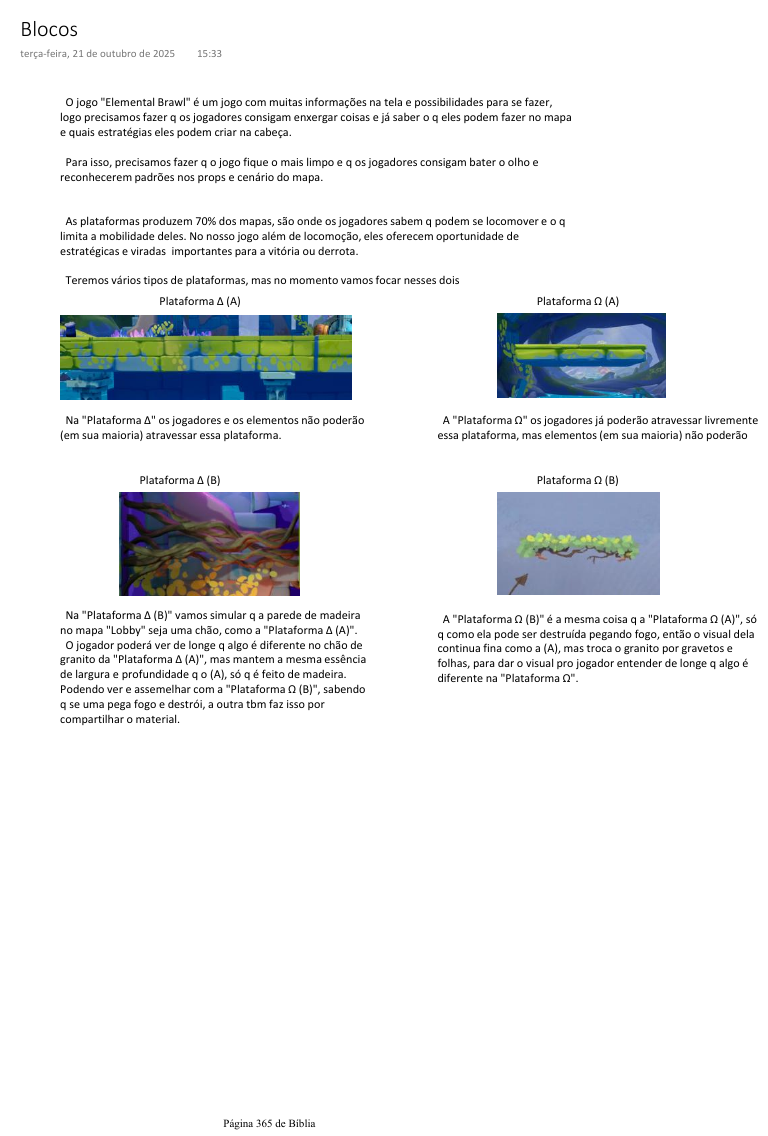
I wrote the principle down in my documents: the game has a lot of information on screen, so players need to glance at the scenery and already know what they can do. A recognizable pattern is worth more than pretty variety.
I defined platform types with fixed roles. The Delta Platform blocks players and elements. The Omega Platform lets players pass through, but holds elements. Shape communicates the collision rule and never lies. Material communicates the property: granite is permanent, twigs and leaves warn from a distance that this thing catches fire and disappears. The player learns to read the map once and that reading holds for every map in the game.
Blocks are also placed with shooting in mind, not just jumping: corners and surfaces that let projectiles ricochet and hit targets direct aim cannot reach. The map takes part in combat.
The environment that reacts (the part that did not ship)
Since 2022 the records hold the interaction system between elements and scenery: states like on fire (spreads to what it touches), wet (shield against fire, more electric damage, freezes faster), stunned and confused, with duration and stacking rules. Wooden crates that spread fire, barrels that explode, puddles that freeze the feet of whoever stands on them, maps with weather that changes the rules.
That system did not make launch. Scope tightened, and the right call was shipping solid, readable arenas instead of half done reactive ones. But the design is specified and testable, ready for updates, and it is the kind of work I show here precisely because the decision to cut is also design.
The reservoir
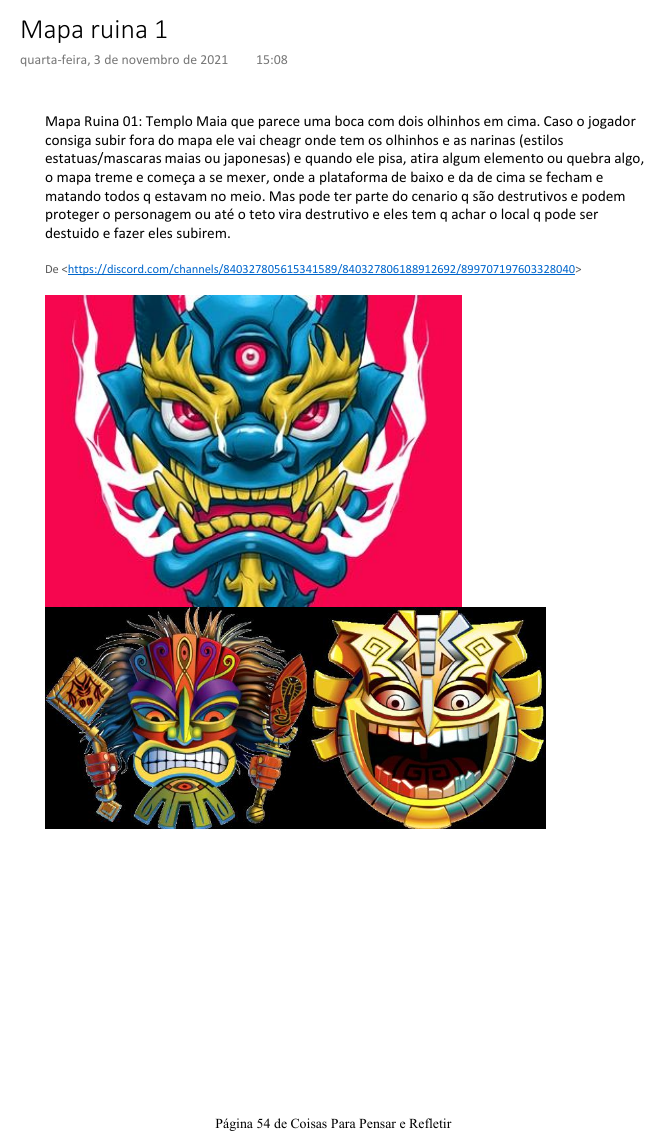
Alongside the released arenas, I kept a bank of map concepts for the game's future: the Titanic sinking in real time, the haunted mansion where lights go out and platforms move, the moving convoy where you fight jumping from wagon to wagon, the black hole map that turns deathmatch into survival mid game. And the Ruin Map, the Mayan temple that is a living mouth: step on the wrong spot and the map trembles, platforms close and swallow whoever stood in the middle.
Ideas are not a game's bottleneck. Prioritization is. The reservoir exists so the game can grow without depending on last minute inspiration.
What this area taught me
Maps taught me to design for change instead of fighting it. Level design in a living game is not drawing perfect stages: it is drawing the rules that let any stage be built, understood and adjusted fast. The platform grammar was worth more than any individual map I could have made.