Combat and movement
Elemental Brawl · design and tuning from prototype to launch, guided by playtests
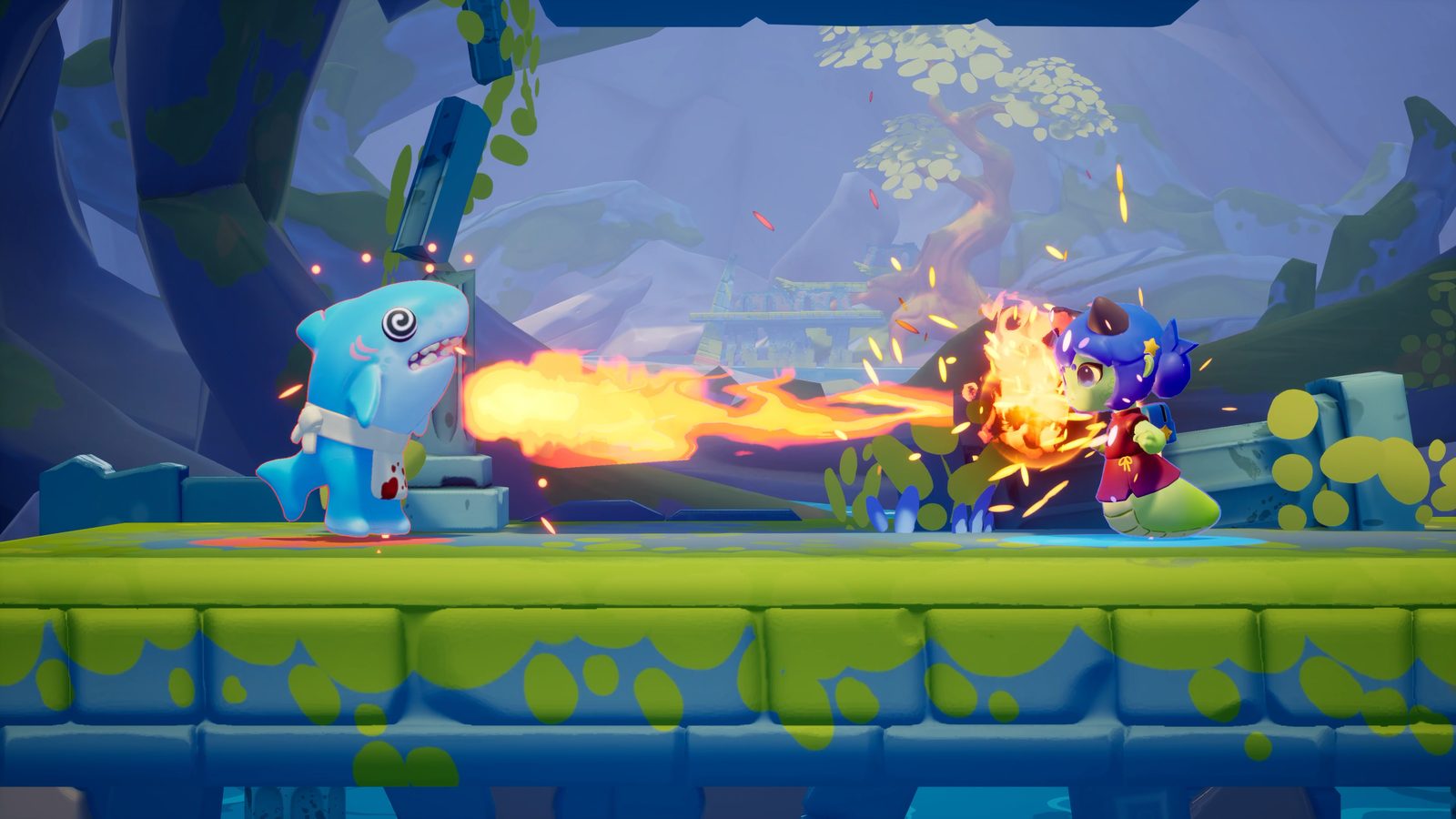
In a party fighter, combat needs to be readable in a split second by someone who never played, and still have layers for someone who has played for months. In Elemental Brawl, I designed and tuned combat and movement from prototype to launch, testing every decision in playtests.
The floor of everything: nobody sits out of the fight
The whole combat structure starts from one rule: players always have a basic attack and a special, the punch and the kick, even with no element at all. The elementless version is weaker on purpose, to push players toward hunting orbs, but it guarantees nobody becomes a defenseless target waiting for the match to end.
That decision shows up in my records since 2021, along with the risk it carried, noted at the time: a new player might think the basic attack is enough. The bet was that they would find out within a couple of exchanges that hunting elements pays off more, and playtests confirmed it.
Movement and aiming
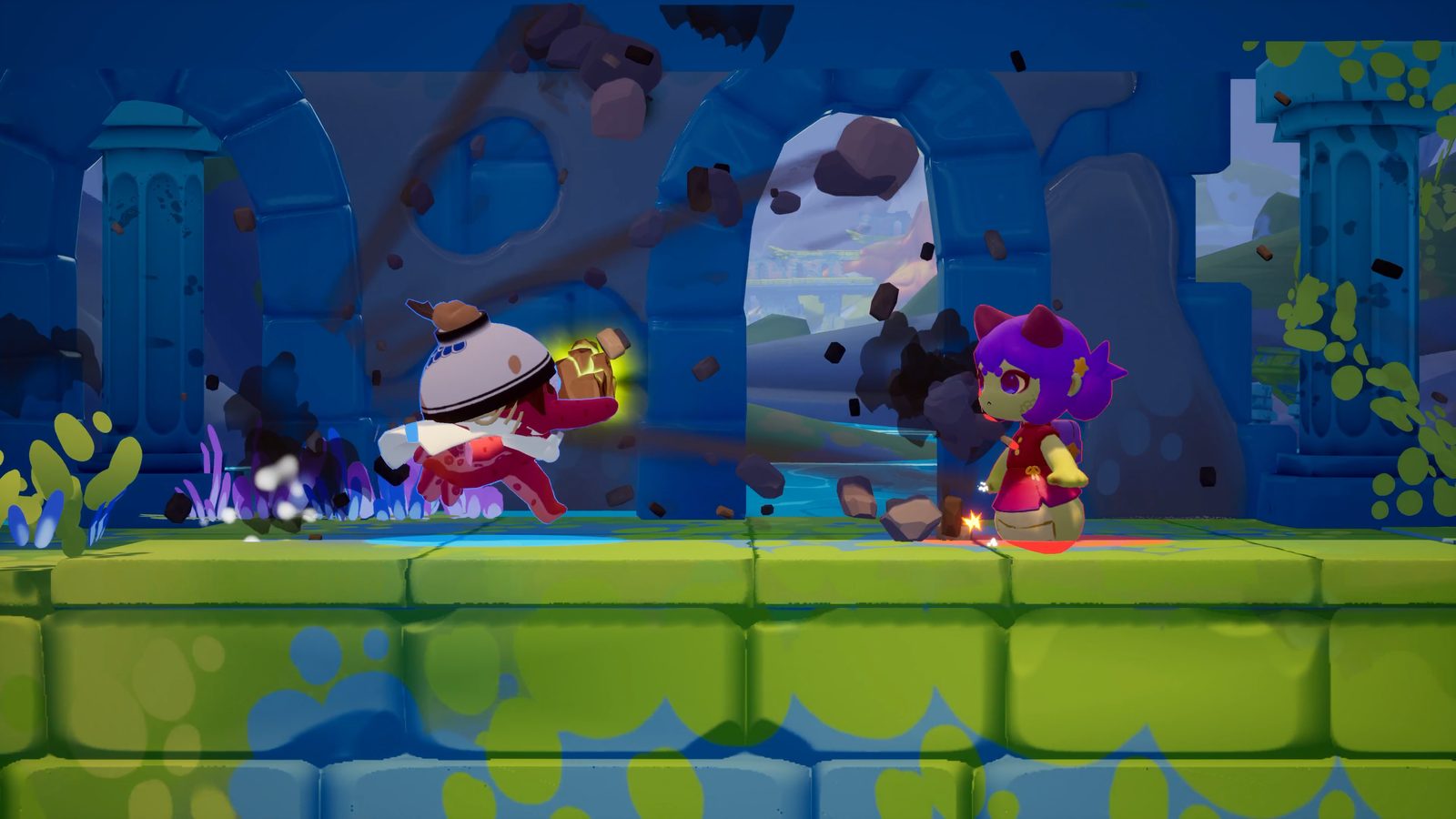
Aiming follows the same philosophy of easy entry with a high ceiling: press the button and you shoot where you are facing, and that is enough to play. Whoever wants more uses the right stick to aim 360 degrees without stopping, shooting backwards while running forward, mid jump or while sliding down a wall, with aim assist helping at both levels.
I proposed the wall slide after noticing a pattern in tests: without it, matches became one relentless rush, just running, jumping and falling. Sliding, the player controls fall speed, can shoot while descending slowly and reaches openings that a fast fall would miss. Wall to wall jumping also became more controllable, no longer depending on timing so tight it felt like the game misreading inputs.
The most told change in this area came from outside. The dash had real qualities: fast repositioning and a high ceiling for skilled players. But the game's target audience was casual and kept stumbling on it, and the dash was causing constant bugs in online mode. When a player suggested replacing it with a double jump, we tested it, and the change solved three problems at once: casual players already knew how to use it, the network bugs disappeared, and maps became easier to design because movement became more predictable.
Balancing in practice
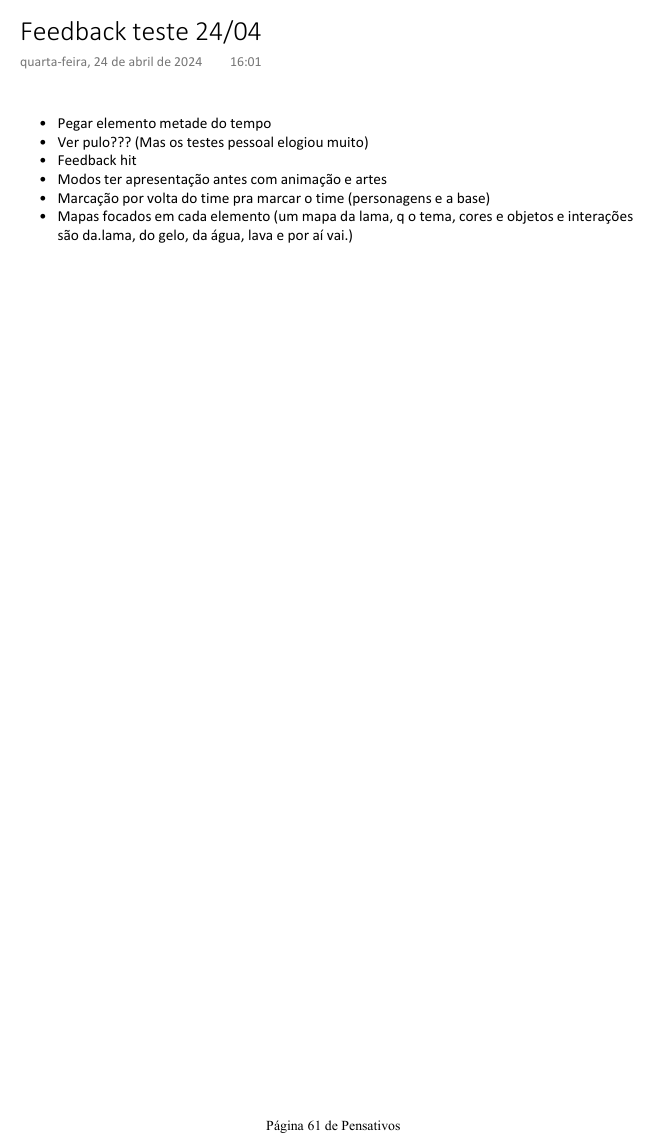
The game's balance did not live in a magic spreadsheet: it lived in the cycle of playing, feeling, noting and adjusting, crossing playtest feedback with the direction the game needed to follow.
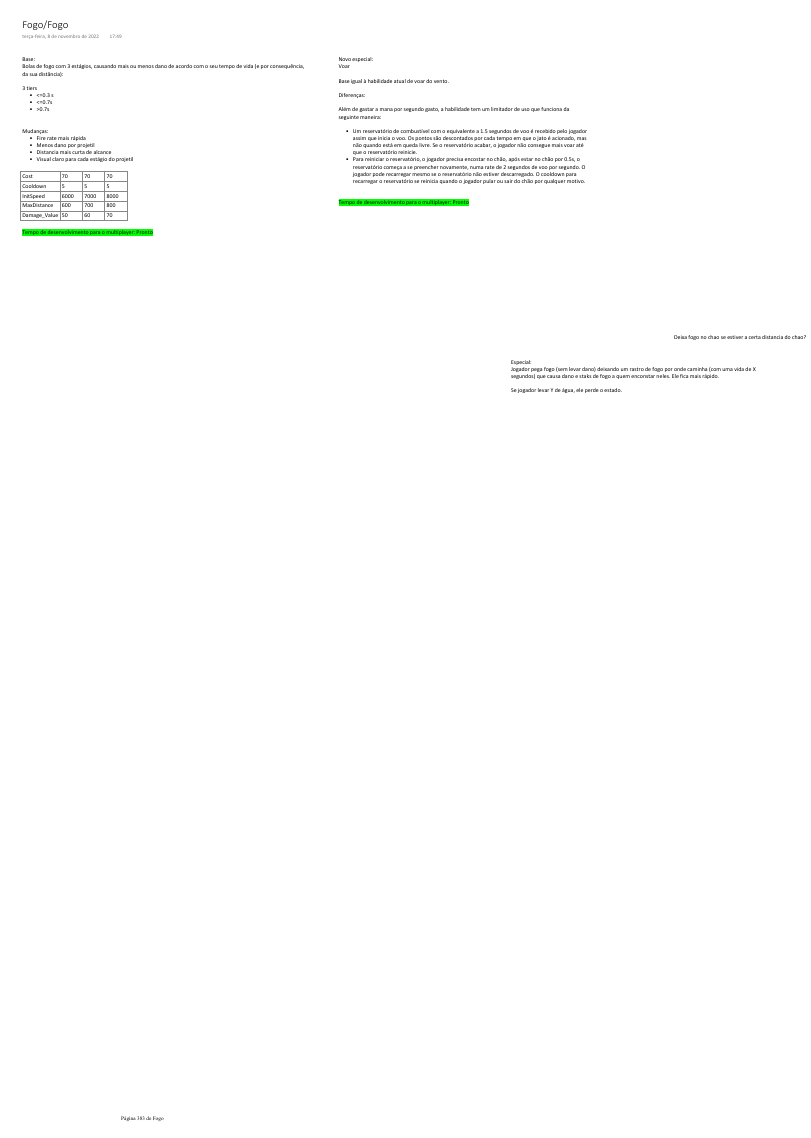
A real example from the records, April 2024: Fire was being the strongest element without needing to be. The note from the time proposes demoting it from raw damage to a role of continuous pressure, scorching the opponent after two hits. That is the kind of adjustment that changes a tool's role in the system instead of just nudging numbers.
Other test notes became direct tasks: ammo and mana calibrated to force weapon swapping, spawn points moved away from edges, a map background too bright hurting the readability of the action.
Communicating rules without heavy UI
A question I kept chasing: how does the player know what mixes with what without opening a menu? The answer documented in the records: communicate through the world. Colored outlines on pickup objects showing what combines, what does not and what discards, in the same philosophy as the scenery props. The rule lives in the map, not in the tutorial.
Result
The shipped combat holds local and online matches with immediate readability: universal basics, elements with their own basic and special, fusions swapping mid run and movement that playtests praised.
What this area taught me: test with people from outside, always, because they are the real players and what is obvious to the team is not always obvious to them.
Listen with patience, but filter: players know what bothers them, not what the game needs. That translation is the designer's job. A player suggested the double jump, and the suggestion won because it was tested and made sense. Other suggestions, tested with the same care, did not improve the game and stayed out.
And mind the macro without dropping the polish of the now: a build with an obvious problem only generates feedback about the obvious problem, and you lose the chance to learn what you did not know yet.